

What Car Seat for What Age: Expert Guide to Safety

Choosing the right car seat for your child can feel like navigating a maze. With so many options available, how do you know which one is perfect for your little one?
As a parent, your top priority is keeping your child safe and comfortable during every car ride. But with age, size, and weight guidelines varying between seats, it can be overwhelming to make the right choice. Imagine driving with peace of mind, knowing your child is secure in a seat that’s designed just for them.
This guide is here to simplify your decision-making process, helping you choose the right car seat for your child’s age and stage. Ready to ensure every journey is as safe as possible? Let’s dive in.
Infant Car Seats
Choosing the right car seat is crucial for your baby’s safety. Infant car seats are designed specifically for newborns and young babies. They offer protection and comfort during travel.
These seats are typically rear-facing and portable. Parents find them convenient for carrying their little ones in and out of cars.
Features And Benefits
Infant car seats come with padded cushioning for extra comfort. The harness system secures your baby firmly. Many seats offer adjustable bases for better fit in different cars. Some models include sun canopies for protection.
These seats provide peace of mind. They ensure your baby is safe while traveling. Parents appreciate the convenience of easily moving the seat from car to stroller.
Age And Weight Guidelines
Infant car seats are suitable for babies from birth up to 12 months. Most seats support weights between 4 to 35 pounds. Always check the manufacturer’s recommendations. Ensure the seat fits your baby’s age and weight.
Babies should remain rear-facing for as long as possible. This position offers the best protection during sudden stops or accidents.
Installation Tips
Correct installation is vital for safety. Read the instruction manual thoroughly. Use the seat’s base for easy installation. Ensure the seat is securely attached to the car.
Check that the harness fits snugly around your baby. Regularly inspect the seat for wear and tear. Practice installing the seat several times to become comfortable with the process.

Credit: realendpoints.com
Convertible Car Seats
Convertible car seats are versatile and grow with your child. They serve both infants and toddlers, adjusting to their needs. With one investment, you can ensure safety from infancy through toddlerhood. Parents appreciate their longevity and adaptability.
When To Transition
Start with a rear-facing position for infants. Keep them rear-facing until at least age two. Some convertible seats allow rear-facing for longer. Transition to forward-facing when your child outgrows the rear-facing limit. Always check the seat’s height and weight limits.
Installation And Adjustments
Proper installation is crucial for safety. Read the manual carefully before installing. Use the LATCH system or seatbelt for secure placement. Adjust harness straps to fit snugly over the shoulders. The chest clip should be at armpit level. Check that the seat does not move more than an inch at the base.
Safety Advantages
Convertible car seats offer enhanced safety features. They have energy-absorbing foam for better impact protection. Many models include side-impact protection. They also provide a five-point harness system. This ensures your child is securely fastened. Convertible seats are a safe choice for growing children.
Booster Seats
Booster seats serve as a crucial transition for children. They bridge the gap between car seats and seat belts. These seats elevate a child, ensuring the seat belt fits properly. A snug seat belt reduces injury risks in accidents. Choosing the right booster seat is essential for your child’s safety.
Types Of Booster Seats
Two main types of booster seats exist. High-back and backless. High-back booster seats have a headrest and side support. They are ideal for cars without headrests. Backless boosters are compact and easy to move. They are suitable for cars with headrests. Both types ensure the seat belt fits correctly.
Age And Size Considerations
Children usually switch to booster seats at age four. They should weigh at least 40 pounds. Height is another factor to consider. Children should be at least 35 inches tall. Always check the manufacturer’s guidelines. Every booster seat has specific weight and height limits.
Proper Use For Safety
Place the booster seat in the back seat. The seat belt should lie across the shoulder and chest. Not the neck or face. The lap belt must lie low across the hips. Regularly check the seat belt’s fit. Adjust as your child grows. Proper use ensures maximum safety for your child.
All-in-one Car Seats
All-in-One Car Seats offer a flexible solution for parents. These seats accommodate infants, toddlers, and older children. They adapt to different stages of a child’s growth. Parents find them convenient due to their versatility. These seats often convert from rear-facing to forward-facing and booster modes. They provide safety and comfort for children of various ages.
Versatility And Long-term Use
All-in-One Car Seats grow with your child. They eliminate the need for multiple seats as your child ages. Their convertible features suit infants to school-aged children. Parents appreciate the long-term use these seats provide. Adjustments are easy, ensuring a perfect fit. They save money and reduce the hassle of buying new seats.
Pros And Cons
Pros of All-in-One Car Seats include their adaptability and value. They offer extended use from infancy to booster seat age. This reduces the need for frequent purchases. They provide consistent safety features through different stages. Cons include their larger size and weight. They might not fit smaller cars easily. Some parents find adjustments slightly complex.
Considerations For Purchase
Consider your car’s space before buying an All-in-One Car Seat. Measure your car’s interior to ensure a good fit. Check the ease of installation. Some models might require more effort. Review the seat’s safety ratings. Prioritize features like side-impact protection. Evaluate the comfort level for your child. Look for adjustable headrests and harnesses.
Common Mistakes
Choosing the right car seat can be overwhelming. Many parents make mistakes unknowingly. These errors can compromise safety. Understanding common mistakes helps ensure your child’s safety.
Incorrect Installation
Incorrect installation is a frequent mistake. Many seats are not installed tightly. A loose car seat can be dangerous. Ensure the seat does not move more than an inch. Read the manual carefully. Seek help if unsure. Many stores offer installation checks.
Premature Transitioning
Transitioning too early to a forward-facing seat is risky. Rear-facing seats offer more protection. Keep your child rear-facing as long as possible. Check weight and height limits. Your child is safer rear-facing.
Ignoring Size Guidelines
Ignoring size guidelines leads to unsafe seating. Car seats have specific size limits. Always match the seat to your child’s size. A seat that’s too small or too big is unsafe. Check the labels for size limits. Follow these guidelines strictly for safety.
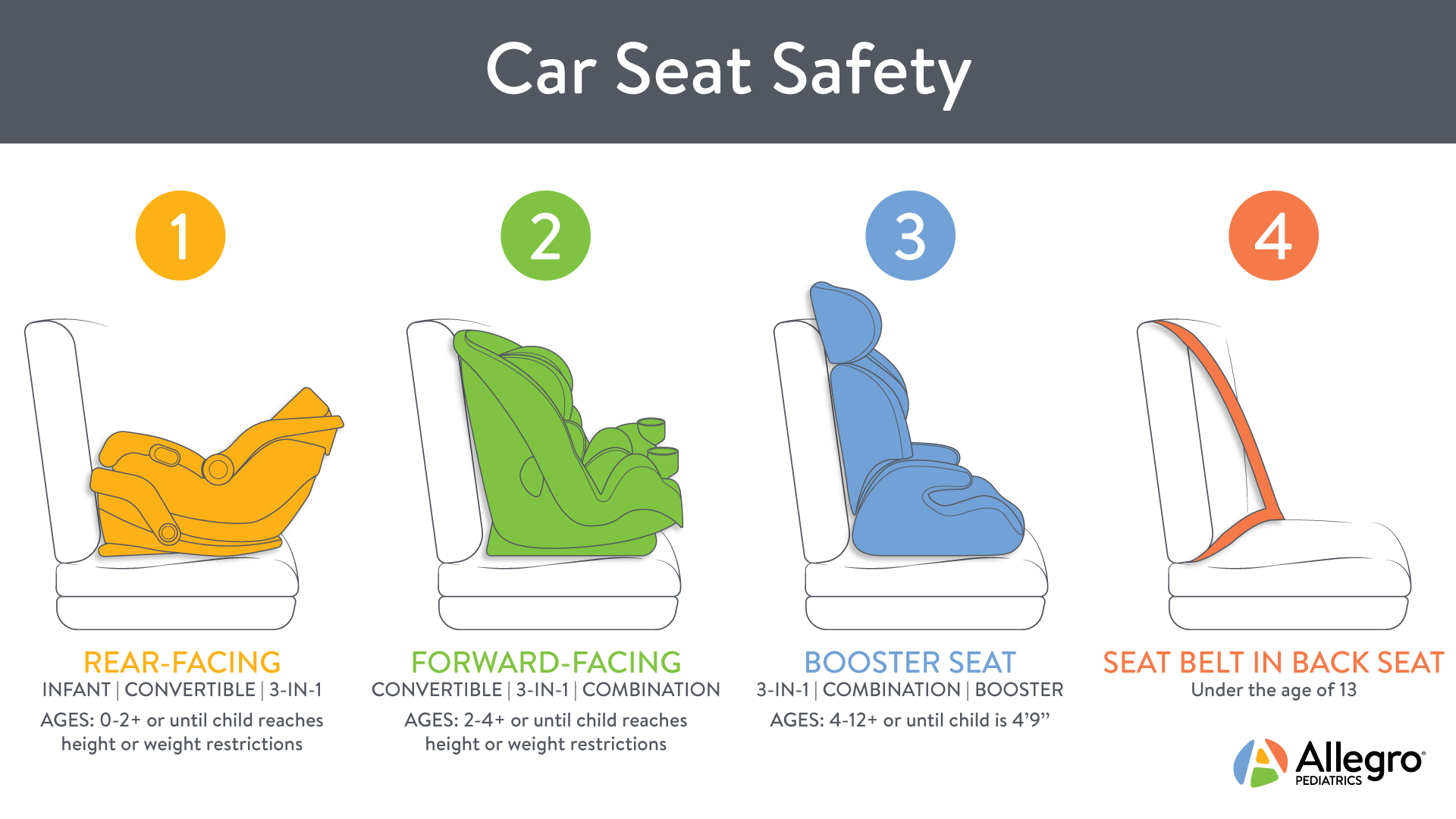
Credit: www.allegropediatrics.com
Safety Standards And Regulations
Choosing the right car seat ensures child safety while traveling. Infants need rear-facing seats for maximum protection. Toddlers transition to forward-facing seats as they grow. Booster seats suit older children until seat belts fit properly. Following age-appropriate standards minimizes risks on the road.
Understanding safety standards and regulations is crucial for car seat choices. Parents and guardians must ensure their child’s safety in vehicles. Compliance with safety laws protects young passengers from potential harm.
Current Safety Laws
Current safety laws mandate specific car seat types based on a child’s age. Infants require rear-facing seats for maximum protection. Toddlers transition to forward-facing seats with harnesses. Older children should use booster seats until seat belts fit properly. These laws ensure children have age-appropriate restraints.
Certification Labels
Certification labels on car seats confirm compliance with safety regulations. These labels include information about weight and height limits. They also show expiration dates, ensuring the seat’s integrity. Parents should always check these labels before purchasing. It guarantees the car seat meets current safety standards.
Future Changes In Regulations
Future changes in regulations aim to enhance child safety further. Experts regularly review accident data to update safety standards. Manufacturers might introduce new technologies for added protection. Parents should stay informed about these regulatory updates. It ensures their child’s car seat remains compliant.
Expert Tips
Choosing the right car seat for your child can be challenging. Expert tips offer guidance to ensure your child’s safety during travel. Understanding the nuances of car seat selection and maintenance is crucial. Explore these expert recommendations to make informed decisions.
Choosing The Right Seat
Each car seat is designed for specific age groups. Infants require rear-facing seats with harnesses. Toddlers need convertible seats that adjust as they grow. Older children benefit from booster seats that elevate them for proper seat belt fit. Check weight and height limits before purchasing a seat. Your child’s comfort and safety should be the priority.
Regular Safety Checks
Safety checks ensure that the car seat functions correctly. Inspect straps and buckles for wear and tear. Verify that the seat is installed tightly without wiggling. Adjust harness height as your child grows. Clean the seat regularly to remove dirt and debris. These checks enhance the seat’s effectiveness in protecting your child.
Resources For Parents
Parents have various resources to guide them in car seat choices. Consult pediatricians for advice on seat types. Online forums offer community experiences and suggestions. Manufacturers provide instructional videos for installation. Retailers offer expert assistance in selecting the right seat. Utilize these resources to ensure your child’s safety.
Frequently Asked Questions
What Car Seat For A 1-year-old?
For a 1-year-old, a rear-facing car seat is best. It offers the most protection and safety. Ensure it meets all safety standards. Rear-facing seats support a child’s head, neck, and spine. Always check the manufacturer’s guidelines.
When To Switch To A Forward-facing Car Seat?
Switch to a forward-facing car seat when your child outgrows the rear-facing seat. Typically, this happens around age 2 or when they reach the height and weight limits. Always follow the car seat manufacturer’s recommendations and local regulations for switching.
What Car Seat For A Newborn?
A newborn should be placed in an infant car seat. These are designed specifically for the smallest passengers. Ensure it’s rear-facing and meets all safety standards. Newborn seats often include additional head and body support.
Is A Booster Seat Needed For A 7-year-old?
A booster seat is necessary until a child fits an adult seat belt properly. This usually happens between ages 8 to 12. Boosters ensure the seat belt fits securely over the stronger parts of a child’s body.
Conclusion
Choosing the right car seat is crucial for child safety. Each age requires a different type. Infants need rear-facing seats. Toddlers graduate to forward-facing seats. Older kids use booster seats. Always check weight and height limits. Safety guidelines help make the best choice.
Install seats correctly for maximum protection. Regularly inspect for wear and tear. Follow manufacturer instructions closely. Prioritize safety over convenience. Investing time in research saves lives. Car seats protect in case of accidents. Stay informed and update seats as needed.
Your child’s safety deserves careful attention.


