


Why Can’t You Use a Car Seat After an Accident: Crucial Facts

Imagine this: you and your little one are involved in a car accident. Thankfully, everyone is okay, but you’re left with a burning question—can you still use that trusty car seat?
It might seem like an easy decision to continue using it if there’s no visible damage, but the truth is more complex. This isn’t just about following guidelines; it’s about ensuring your child’s safety. You’ll discover why experts strongly advise against using a car seat post-accident, even if it appears unharmed.
We’ll explore the hidden risks and the critical reasons behind these recommendations. Your child’s safety is paramount, and understanding these details could make all the difference. Keep reading to uncover the facts that every parent needs to know.
Impact On Car Seat Safety
Car accidents can have a big impact on car seat safety. Even minor collisions can weaken the structure of a car seat. This can compromise its ability to protect a child in future accidents. Understanding these impacts is crucial for ensuring child safety.
Damage To Car Seat Integrity
The integrity of a car seat can be compromised in an accident. Visible damage, like cracks or broken parts, is easy to spot. But, not all damage is visible. Internal components may suffer stress and weaken. This hidden damage can reduce a car seat’s effectiveness.
Effect On Safety Features
Car seats have important safety features. These include harnesses and impact-absorbing materials. An accident can affect these features. The harness may not hold a child securely anymore. Impact-absorbing materials might not function well. This can put a child at risk in another accident.
Manufacturers often advise replacing car seats after an accident. This is to ensure maximum safety. They understand their product’s limits. Following their guidelines helps keep children safe. Each car seat brand may have different advice, so checking is essential.
Insurance Considerations
Insurance policies may cover car seat replacement after an accident. It’s wise to check with your insurer. They might provide a new seat at no extra cost. This ensures your child’s safety without financial burden.
Structural Integrity Concerns
After a car accident, the safety of a car seat becomes questionable. The structural integrity of the seat may be compromised. Even minor collisions can affect its ability to protect. Understanding the concerns about structural integrity is crucial. Let’s explore why a car seat shouldn’t be used post-accident.
Hidden Damages
Accidents can cause hidden damages to a car seat. These damages aren’t visible to the naked eye. Even small cracks can weaken the seat’s structure. This affects its ability to protect a child in future accidents. Always inspect the seat thoroughly after an accident.
Weakened Materials
The materials in car seats absorb impact during a crash. This process can weaken the foam or plastic components. Weakened materials cannot offer the same level of protection. It’s important to replace the seat to ensure safety.
Compromised Safety Features
Safety features in car seats are precisely designed. An accident can compromise these features. Features like harnesses or buckles may not function properly. This increases the risk of injury in future accidents. Always prioritize a child’s safety by using an undamaged seat.
Manufacturer Guidelines
Car seat manufacturers provide specific guidelines after accidents. Many recommend replacing the seat regardless of visible damage. Following these guidelines ensures maximum safety for your child. Always check the manufacturer’s instructions post-accident.
Hidden Damage Risks
Many drivers overlook the hidden damage risks of car seats post-accident. Car seats, like any safety equipment, might look fine on the outside. Yet, they could hide internal damage that compromises safety. Understanding these risks helps ensure your child’s protection.
Internal Structural Damage
Car seats endure significant force during accidents. This can cause unseen internal damage. The plastic shell might crack or weaken. Even small fractures can reduce the seat’s ability to protect your child. Always check for manufacturer guidelines after an accident.
Compromised Safety Features
Safety features like harnesses and buckles might get damaged. Their effectiveness can decrease after absorbing impact forces. A damaged harness might not hold your child securely. Even a slight malfunction can pose serious risks.
Foam And Padding Damage
The foam and padding absorb shock during a crash. Hidden tears or compression can occur, reducing protection levels. This can affect the seat’s ability to cushion your child in future accidents. Always inspect the padding thoroughly.
Increased Vulnerability In Future Accidents
A compromised car seat may not perform well in future incidents. Even minor damage can weaken its structure. This increases the risk of injury in subsequent crashes. Replacing the seat ensures optimal protection.
Manufacturer Guidelines
Car seat manufacturers set specific guidelines. These guidelines ensure the safety of children. After an accident, a car seat may be compromised. Following these guidelines is crucial. Let’s explore why these rules are important.
Understanding The Guidelines
Each car seat has a manual. This manual includes safety instructions. It also lists what to do after an accident. Manufacturers emphasize replacing seats after crashes. Even minor accidents can impact seat integrity.
Safety Standards And Testing
Manufacturers conduct rigorous tests. They ensure seats meet safety standards. After an accident, these standards might not hold. Car seats are tested for specific conditions. Real-life accidents can differ.
Potential Hidden Damage
Damage isn’t always visible. Internal parts can be weakened. This can affect the seat’s performance. Trust the manufacturer’s advice to replace it. It guarantees continued protection for your child.
Warranty And Liability Issues
Using a damaged seat can void warranties. It can also lead to liability issues. Manufacturers won’t guarantee safety if guidelines aren’t followed. Replacing the seat ensures compliance with their policies.
Insurance And Replacement Policies
After a car accident, assessing damages becomes crucial. Insurance and replacement policies play a vital role. They ensure safety and compliance with regulations. These policies determine if a car seat needs replacement. Understanding these policies can save lives.
Insurance Coverage For Car Seats
Insurance often covers car seat replacement. This applies after an accident. Coverage depends on your policy. Some insurers replace seats automatically. Others require proof of damage. Always check your policy details.
Filing A Claim For Replacement
Start by filing a claim with your insurer. Provide details of the accident. Include photos of the damaged seat. This helps verify the need for replacement. A quick and accurate claim speeds up the process.
Importance Of Policy Details
Policy details matter greatly. They specify what’s covered. Some policies cover full replacement. Others might offer partial coverage. Understanding these details ensures you’re prepared.
Manufacturers often have guidelines on seat replacement. These guidelines focus on safety. Follow them to ensure your child’s safety. They usually recommend replacing seats after any accident.
Safety Standards Compliance
Insurance policies ensure compliance with safety standards. Replacing a seat maintains these standards. It’s essential for protecting passengers. Never overlook the importance of these standards.
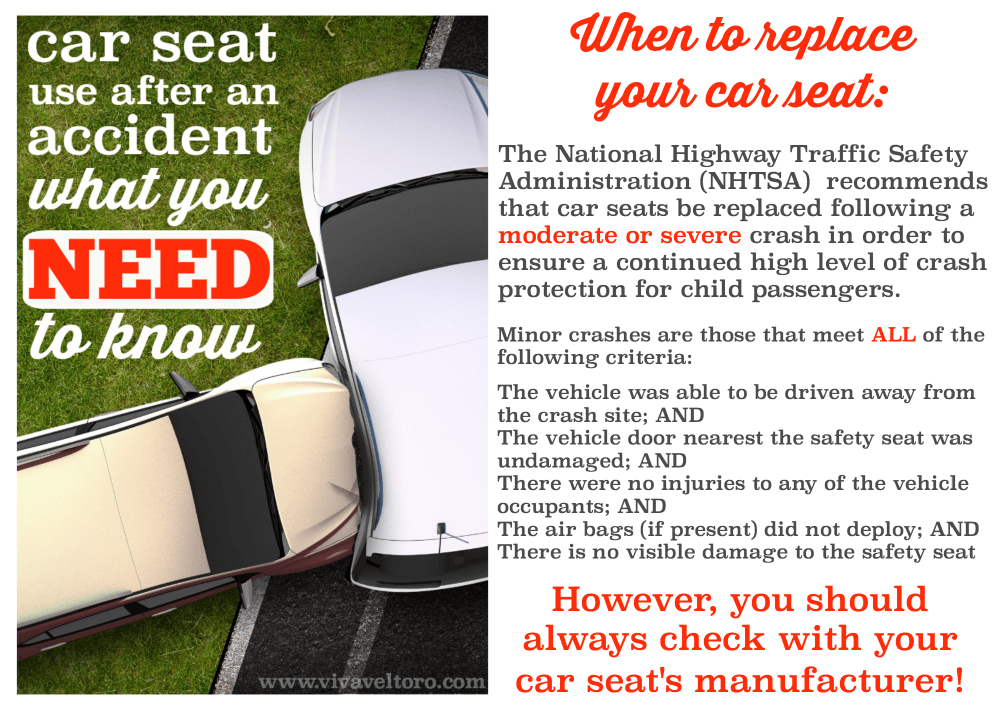
Credit: www.vivaveltoro.com
Importance Of Professional Inspection
After a car accident, the safety of your child’s car seat becomes uncertain. Professional inspection plays a crucial role in ensuring that the car seat remains safe for use. Damage may not be visible, yet it can still affect the car seat’s ability to protect your child.
Why Professional Inspection Is Essential
Experts have the skills to detect hidden damage in car seats. They understand how the structure and materials might be compromised. Their trained eyes spot issues that could lead to potential risks.
Understanding Invisible Damage
Car seats can suffer internal damage during a crash. The outer shell might look intact, but inside, materials could be weakened. This internal damage can impair the seat’s ability to absorb impact properly.
Guaranteeing Future Safety
A professional inspection ensures that the car seat can protect effectively. Experts can confirm if the seat remains safe or needs replacement. They provide peace of mind for your child’s future safety.
Certified Inspectors Make A Difference
Certified inspectors follow strict guidelines to assess car seats. They know the standards required for safe use. Their inspections are thorough, ensuring no detail is missed.
Steps For Post-accident Car Seat Check
After a car accident, checking your child’s car seat is crucial. Damaged car seats can compromise safety. Thorough inspection helps ensure your child’s protection.
1. Inspect For Visible Damage
Look for cracks, dents, or broken parts. Check the harness and belt for fraying. Examine the seat’s body for any damage.
2. Check The Frame
The seat frame should be intact. Any bending or distortion indicates damage. A compromised frame won’t protect effectively.
3. Assess The Harness System
Ensure the harness is working. Buckles should latch securely. Straps should adjust smoothly without resistance.
4. Verify Seat Attachment
Ensure the car seat is firmly attached. Test the connectors and latches. A loose seat is unsafe for travel.
5. Evaluate Seat Cushions
Check the cushions for tears. Ensure padding is undamaged. Damaged cushions can affect comfort and safety.
6. Consult The Manufacturer
Reach out to the car seat manufacturer. Ask about post-accident policies. They provide guidance on seat inspection.
7. Consider Professional Inspection
Seek a professional car seat technician. They can assess hidden damage. Professional inspection ensures thorough safety.
8. Purchase A Replacement
If the seat shows damage, replace it. A new seat provides peace of mind. Always prioritize your child’s safety.
Common Misconceptions
After a car accident, many drivers wonder about their car seat’s safety. Unfortunately, misconceptions lead people to use damaged car seats. This poses risks to children. Understanding these misconceptions helps make informed decisions.
Misconception: A Minor Accident Won’t Affect The Car Seat
Many believe minor accidents don’t damage car seats. This isn’t true. Even small impacts can weaken the car seat’s structure. Damage might not be visible but can compromise safety. Always inspect or replace the seat after any accident.
Misconception: If The Car Looks Fine, So Is The Car Seat
People often think a car’s exterior condition reflects the seat’s condition. This belief is misleading. The car might look fine, but the car seat could be compromised. Internal damage isn’t always visible. Safety should never rely on appearances alone.
Misconception: Car Seats Have A Built-in Damage Indicator
Some assume car seats have indicators showing damage. This is not the case. Car seats don’t have built-in signals for damage. Relying on visible signs can be risky. Always consult a professional to assess the car seat after an accident.
Misconception: Reusing The Seat Saves Money
Parents might think reusing a car seat saves money. But, safety risks outweigh any savings. Damaged car seats can fail in another crash. Prioritize your child’s safety over saving money. Invest in a new car seat for peace of mind.
Safety Tips For Parents
Ensuring the safety of your child is a top priority for parents. Car seats play a crucial role in protecting young passengers during travel. After an accident, it is essential to evaluate the condition of the car seat. This ensures your child’s continued safety on the road.
Inspect The Car Seat Immediately
After any accident, inspect the car seat for visible damage. Look for cracks, dents, or broken parts. Even minor accidents can compromise the seat’s integrity. Examine the harness and buckles closely. Ensure they function correctly without any stiffness or looseness.
Follow Manufacturer Guidelines
Always check the car seat’s manual after an accident. Manufacturers provide specific guidelines for post-accident usage. Some seats may require replacement even after minor collisions. Ignoring these guidelines can put your child at risk.
Seek Professional Advice
If unsure about the seat’s condition, consult a professional. Child passenger safety technicians can offer expert advice. They can help assess whether the car seat needs replacement. This ensures you make informed decisions for your child’s safety.
Consider Insurance Coverage
Check with your insurance provider about car seat replacement policies. Many policies cover the cost of replacing car seats post-accident. Familiarize yourself with these benefits. This can alleviate financial burdens when ensuring your child’s safety.
Prioritize Regular Maintenance
Regularly maintaining your car seat can prevent accidents. Clean and inspect the seat regularly for wear and tear. Ensure all parts are in working condition. A well-maintained seat enhances safety and longevity.

Credit: saferide4kids.com

Credit: saferide4kids.com
Frequently Asked Questions
Why Replace A Car Seat After An Accident?
Car seats must be replaced after an accident due to potential structural damage. Even if the damage isn’t visible, the seat might not offer adequate protection. The integrity of the car seat is crucial for safety. Always prioritize your child’s safety by replacing the seat.
How Does A Crash Affect Car Seats?
A crash can weaken a car seat’s structure. Even minor accidents can cause unseen damage. This can compromise the seat’s ability to protect during future incidents. Manufacturers recommend replacing car seats after any crash to ensure maximum safety.
Can Car Seat Damage Be Invisible?
Yes, damage to car seats can be invisible. Structural integrity might be compromised without visible signs. This hidden damage can significantly affect performance in another accident. Always replace the seat after a crash, regardless of visible damage.
What Are Manufacturer Guidelines On Car Seat Replacement?
Manufacturers typically advise replacing car seats after any accident. This ensures the seat’s integrity remains intact. Their guidelines are based on safety testing and extensive research. Always follow manufacturer instructions to ensure maximum safety for your child.
Conclusion
Accidents can damage car seats, making them unsafe for future use. Safety should always come first. It’s crucial to check for any hidden damage. Replacing a car seat after an accident protects your child. Think of it as an investment in safety.
Manufacturers often recommend replacement after any collision. This ensures optimal protection. Always trust expert advice on child safety. Don’t risk using a compromised car seat. Peace of mind comes from knowing your child is secure. Make informed decisions to keep your loved ones safe on the road.


