

What are the Car Seat Laws in Florida: Essential Guide for Safety

Are you sure your child is as safe as possible when riding in your car? Knowing the car seat laws in Florida isn’t just about following the rules—it’s about protecting your little one every time you hit the road.
If you’re a parent or caregiver, understanding these laws can save you from costly fines and, more importantly, keep your child secure. Keep reading to discover exactly what Florida requires and how you can make every ride safer for your family.
Credit: www.tncim.com
Florida Car Seat Requirements
Florida has specific rules to keep children safe in cars. These rules tell parents and drivers what type of car seats to use. Following these laws helps protect kids in case of a crash. The state sets clear age and weight limits for each car seat type.
Understanding these requirements helps you choose the right seat for your child. It also keeps you on the right side of the law. Safety and legal compliance go hand in hand.
Age And Weight Criteria
Children under 5 years must use a child safety seat. Infants under 1 year or weighing less than 20 pounds need a rear-facing seat. Toddlers between 1 and 4 years or weighing 20 to 40 pounds use forward-facing seats. Kids aged 4 or 5, weighing 40 to 80 pounds, use booster seats. Children over 5 years or weighing more than 80 pounds can use regular seat belts.
Types Of Approved Car Seats
Florida law requires car seats to meet federal safety standards. Rear-facing seats suit newborns and small babies. Forward-facing seats work well for older toddlers. Booster seats raise children to fit adult seat belts properly. Each type must be installed correctly for best protection. Always check for labels showing compliance with safety rules.
Rear-facing Seat Rules
In Florida, car seat laws focus heavily on the safety of young children. Rear-facing seats offer the best protection for infants and toddlers. The law requires children to use these seats for a certain time before switching to forward-facing seats. Understanding these rules helps keep kids safe in the car.
Recommended Duration
Children should ride in rear-facing seats until they are at least two years old. Experts advise keeping children rear-facing as long as possible. This position supports the head, neck, and spine during sudden stops. Florida law supports this safety advice to reduce injury risks. Parents often ask when to switch seats. The best answer is to wait until the child outgrows the rear-facing seat’s height or weight limit.
Installation Tips
Proper installation of a rear-facing seat is crucial for safety. Always read the car seat manual carefully. Check that the seat is tightly secured with either the seat belt or the LATCH system. The seat should not move more than an inch side to side. Place the seat at the correct recline angle to keep the child’s airway open. Regularly inspect the car seat for wear and tear. Correct installation ensures maximum protection for your child.
Forward-facing Seat Guidelines
Forward-facing car seats are the next step after rear-facing seats for young children. Florida law sets clear rules for using these seats safely. These rules help protect children during car rides. Understanding them is important for every parent and caregiver.
Transition Age
Children should switch to a forward-facing seat after outgrowing their rear-facing seat. Florida law requires children to remain rear-facing until at least age 2. Many experts suggest keeping children rear-facing longer for better safety. After age 2, children can move to a forward-facing seat with a harness.
Harness Usage
Forward-facing seats must use a harness to secure the child. The harness keeps the child snug and safe in the seat. Florida law mandates a five-point harness for forward-facing car seats. The harness should fit tightly without slack. It must be used until the child reaches the seat’s height or weight limit.

Credit: www.trafficticketteam.com
Booster Seat Regulations
Booster seat regulations in Florida aim to keep children safe during car rides. These rules ensure kids use the right seat for their size and age. Using a booster seat helps position the seat belt correctly on a child’s body. This reduces the risk of injury in a crash.
When To Use Booster Seats
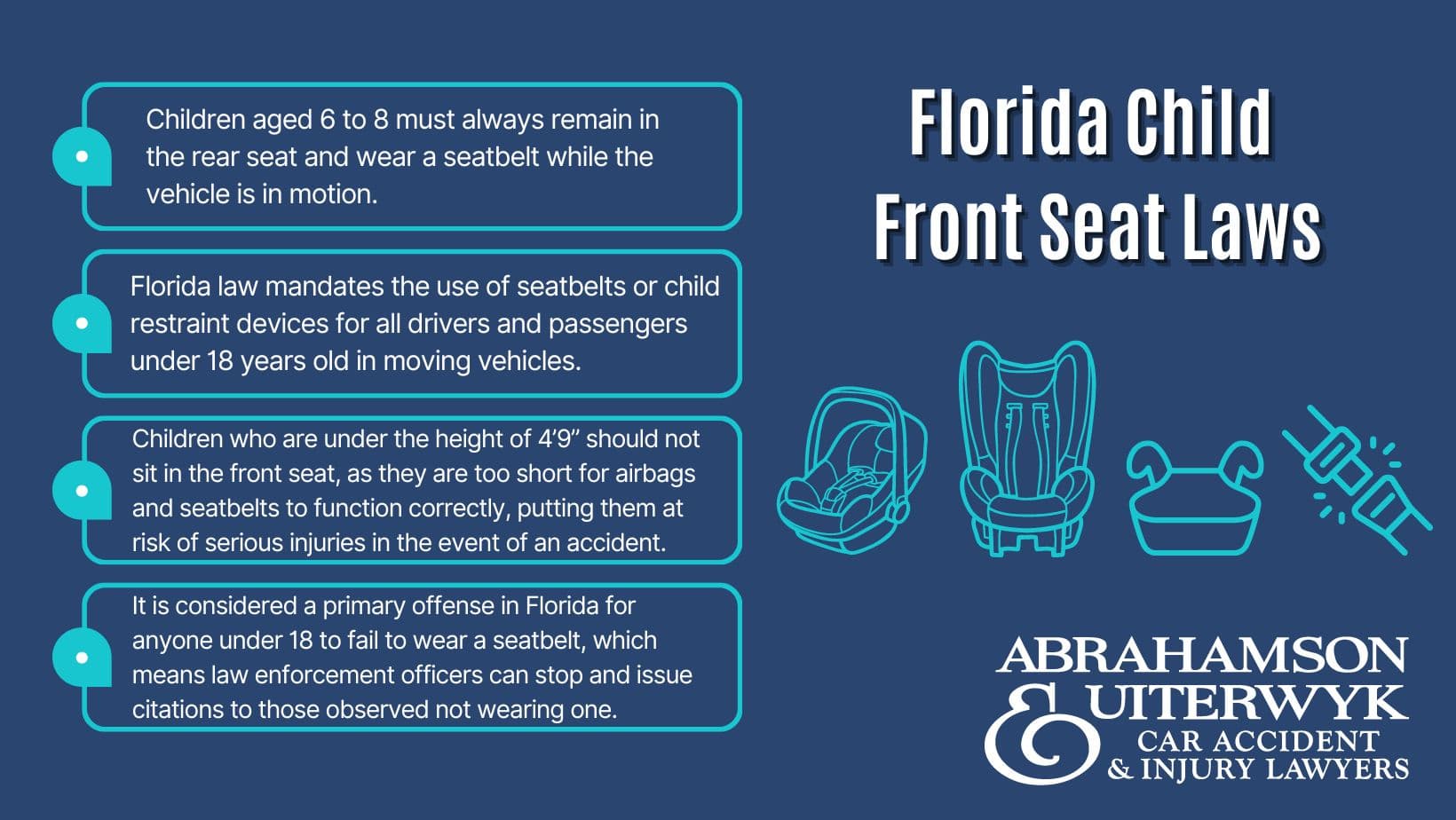
Florida law requires children to use booster seats after they outgrow their car seats. Children must use booster seats until they reach 4 feet 9 inches tall. Usually, this happens between ages 8 and 12. The booster seat helps the seat belt fit properly on the child’s shoulder and lap. Without a booster, the seat belt may cause harm in an accident.
Proper Booster Seat Fit
A booster seat fits properly when the child sits all the way back. The lap belt should lie low across the hips, not the stomach. The shoulder belt should cross the chest and shoulder, not the neck or face. The child’s feet should touch the floor or the car’s footrest. This fit keeps children safe and comfortable during trips.
Seat Belt Laws For Older Children
Florida has clear seat belt laws for older children. These rules help keep kids safe during every ride. Understanding these laws is important for parents and caregivers. Proper use of seat belts reduces injury risks in crashes.
Minimum Age And Height
Children must be at least 5 years old to stop using a car seat. After this age, they should use a booster seat until they reach 4 feet 9 inches tall. Kids shorter than 4 feet 9 inches must stay in a booster seat for proper safety. The law aims to match seat belt use with the child’s size.
Correct Seat Belt Positioning
The seat belt must fit snugly across the chest and shoulder. The lap belt should lie low on the hips, not the stomach. A poor fit can cause serious injuries in a crash. Proper positioning ensures the seat belt works as it should. Always check the belt fit before starting the drive.
Penalties For Non-compliance
Not following Florida’s car seat laws can lead to serious trouble. The state enforces strict rules to keep children safe. Penalties for ignoring these laws protect kids and encourage drivers to comply.
Fines And Legal Consequences
Violating car seat laws in Florida can result in fines. The amount varies but usually starts at $60. Repeat offenses may lead to higher fines. Police officers can issue tickets if they spot violations. Besides fines, drivers might face court costs. In some cases, violations can affect driving records. Authorities take these laws seriously to ensure child safety.
Impact On Insurance
Failing to follow car seat laws may affect your insurance rates. Insurance companies see violations as risky behavior. This can lead to increased premiums. Some insurers may even deny claims after an accident. Keeping car seats properly installed helps avoid these problems. Protect your family and your wallet by following the law.
Tips For Choosing The Right Car Seat
Choosing the right car seat is very important for your child’s safety. The right seat fits your child’s age, weight, and height. It also fits well in your car. This section helps you find the best car seat for your child. Consider these tips carefully before buying.
Safety Ratings
Check the safety ratings of any car seat. Look for seats tested by trusted organizations. A high safety rating means the seat protects your child better. Avoid seats with poor safety records. Always pick a seat with strong crash protection features.
Ease Of Installation
Choose a car seat that is easy to install correctly. A seat that is hard to install may not be safe. Look for clear instructions and simple locking systems. Test the seat in your car before buying. Proper installation keeps your child secure on every trip.
Resources For Florida Parents
Florida parents need clear guidance on car seat laws to keep children safe. The state offers many resources to help families follow the rules. These resources provide support, education, and hands-on assistance. Parents can use them to ensure their car seats are installed correctly and meet all safety standards.
Inspection Stations
Florida has many inspection stations for car seats. Certified technicians check car seats for proper installation and safety. They show parents how to use the seats correctly. This service is often free or low cost. Inspection stations help prevent common mistakes that reduce protection during crashes.
Educational Programs
Educational programs teach parents about Florida’s car seat laws. These programs explain age, weight, and height requirements for seats. Parents learn how to choose the right seat for their child. Workshops and classes offer hands-on learning with experts available for questions. These programs increase awareness and improve child safety on the road.
Frequently Asked Questions
What Are Florida’s Age Requirements For Car Seats?
Florida law requires children under 5 years old to use a car seat or booster seat. Children aged 5 to 7 must use a booster seat. Kids 8 and older can use a seat belt.
When Should A Child Switch To A Booster Seat?
Children in Florida should switch to a booster seat after outgrowing their forward-facing car seat. This usually happens around age 4 or when they exceed the seat’s weight limit.
Are There Penalties For Violating Florida Car Seat Laws?
Yes, Florida imposes fines and points on your driving record for car seat violations. Penalties encourage compliance to keep children safe in vehicles.
What Types Of Car Seats Are Legal In Florida?
Florida law recognizes rear-facing, forward-facing, and booster seats. The choice depends on the child’s age, weight, and height to ensure safety.
Conclusion
Car seat laws in Florida protect children on the road. Following these rules keeps kids safe during every trip. Always use the right car seat for your child’s age and size. Check the seat’s installation carefully before driving. Staying informed helps prevent accidents and fines.
Safety matters most when traveling with little ones. Remember, proper car seat use saves lives. Keep your child secure and enjoy peace of mind. Stay aware of law updates to stay compliant. Simple steps make a big difference in safety.


