


Can You Use a Car Seat After an Accident: Essential Guide

Have you ever wondered if it’s safe to use a car seat after an accident? This is a crucial question that concerns not just your child’s safety, but also your peace of mind.
Imagine driving down the road, feeling confident that your child is secure, only to second-guess yourself because of a past fender-bender. You need to know: does that minor accident mean it’s time for a new car seat? We’ll unravel the mystery and provide clear guidance, so you can make the best decision for your family’s safety.
Keep reading to discover the facts and ensure your child’s car seat is always ready to protect.

Credit: saferide4kids.com
Assessing Car Seat Damage
After an accident, car seats might look undamaged. Yet, unseen problems may exist. Assessing damage is crucial for safety. It ensures the seat still protects your child. Thorough checks can reveal hidden issues. Let’s explore how to inspect car seats.
Visual Inspection Tips
Start by checking the seat’s fabric. Look for tears or frayed edges. Examine the buckles. Ensure they latch securely. Inspect the plastic shell. Cracks or dents need attention. Confirm the harness is intact. It should be free of twists. Verify the seat’s base is stable. A loose base can be dangerous. Keep an eye out for loose parts. Even small pieces matter.
Hidden Structural Issues
Structural issues may not be visible. Internal damage can affect safety. Check the seat’s frame carefully. A compromised frame is risky. Listen for unusual sounds. Clicking or rattling may signal trouble. Test the seat’s recline feature. It should move smoothly. Inspect the foam padding. It must be firm and undamaged. Ensure all components fit snugly. Any looseness is cause for concern. Seek expert advice if unsure.
Manufacturer Guidelines
After a car accident, car seat safety becomes crucial. Many parents wonder if they can still use the car seat. Manufacturer guidelines provide essential information on this matter. They help you understand the steps to ensure your child’s safety. Each brand has its own set of rules. It is vital to know these guidelines before making a decision.
Warranty And Replacement Policies
Manufacturers offer specific warranty and replacement policies. These policies vary based on the car seat brand. Some companies provide free replacements after an accident. Others may require proof of the crash. It’s wise to check the warranty details before purchasing. Knowing the policy can save you money and ensure safety.
Specific Instructions For Different Brands
Different car seat brands have unique instructions post-accident. Some brands recommend immediate replacement after any crash. Others consider the severity of the accident. It’s important to consult the user manual for precise instructions. This manual often contains vital safety information. Following the brand’s advice ensures your child’s protection on the road.
Types Of Accidents And Their Impact
After an accident, knowing if a car seat is safe is crucial. Different types of accidents affect car seats in various ways. Understanding these impacts helps ensure children’s safety. Let’s explore the types of accidents and their effects on car seats.
Minor Collisions
Minor collisions often occur at low speeds. These accidents might seem harmless. Yet, they can still affect car seats. A small bump can cause hidden damage. Check the car seat for cracks or breaks. Even minor damage can reduce protection. Always inspect the car seat closely.
Severe Crashes
Severe crashes involve high speed and force. These accidents can greatly damage car seats. The impact may not be visible. The internal structure can be compromised. Severe crashes often require replacing the car seat. The safety of children is the top priority.
Safety Considerations
After a car accident, ensuring the safety of your child is crucial. A car seat may look intact, but hidden damage could compromise its effectiveness. Understanding safety considerations helps you make informed decisions. Read on to explore the risks and expert advice.
Risks Of Reusing A Damaged Car Seat
Hidden cracks can weaken a car seat’s structure. Even minor accidents might cause unseen harm. These fractures reduce the car seat’s ability to protect during future crashes. Internal damage can also affect the seat’s reliability. Straps and latches may not hold as securely. This jeopardizes your child’s safety during travel.
Manufacturers design car seats to absorb impact only once. Reusing a damaged seat risks your child’s safety. It might not perform as expected in another accident. Always inspect car seats thoroughly after any collision.
Expert Recommendations
Safety experts advise replacing car seats after an accident. Even if damage is not visible, the risk remains high. Manufacturers typically recommend buying a new seat post-accident. This ensures maximum protection for your child.
Consult your car seat manual for specific guidance. Some manufacturers provide detailed instructions on post-accident procedures. Always prioritize your child’s safety over cost concerns. An undamaged car seat is vital for secure travel.
Insurance may cover the cost of a new car seat. Check with your provider for details on claims. Prioritizing a new seat ensures your child travels safely. Follow expert advice for peace of mind on the road.
Replacement Options
After a car accident, safety becomes a top priority. Evaluating the condition of your car seat is crucial. It might need replacing to ensure your child’s safety. There are various options available for replacement. Understanding these options helps in making informed decisions.
Insurance Coverage
Insurance might cover the cost of a new car seat. Check your policy for details. Some policies offer full replacement coverage. Others might only cover a portion. Contact your insurer directly. Ask about their specific policies. It’s important to know what is covered. This knowledge saves you money and ensures safety.
Choosing A New Car Seat
Choosing a new car seat requires careful consideration. Check for safety ratings first. Look for seats with high crash-test scores. Consider the size and weight of your child. Ensure the seat fits well in your vehicle. Read reviews from other parents. Their experiences can guide your choice. Always buy from reputable retailers. This ensures quality and reliability.
Legal Implications
Understanding the legal implications of using a car seat post-accident is crucial. Laws vary by location, and non-compliance can lead to serious consequences. Knowing what the law says helps ensure the safety of your child.
Laws And Regulations
Laws about car seat use after an accident differ by region. Some areas require replacing the seat regardless of damage visibility. Others allow continued use if no obvious harm is detected. Always check local regulations to stay compliant.
Manufacturers may have specific guidelines too. Following these can affect both safety and legality. Ignoring these could void warranties or insurance claims.
Consequences Of Non-compliance
Not following car seat laws can lead to fines or penalties. It can also impact insurance claims. Using a damaged seat may reduce compensation in case of future accidents.
Non-compliance can also jeopardize your child’s safety. A compromised seat may not protect effectively during another crash. Always prioritize safety by adhering to laws and guidelines.
Common Myths And Misconceptions
Car seats save lives. After an accident, many wonder if they remain safe. Misunderstandings about car seat safety often lead to confusion. Some myths can even put children at risk. This section debunks common myths and misconceptions about car seat safety. Let’s explore and clarify these beliefs.
Misunderstandings About Car Seat Safety
Many think a minor accident doesn’t affect car seat safety. This isn’t true. Even small impacts can compromise the seat’s integrity. It’s crucial to inspect the car seat closely. Another common belief is that car seats only need replacing after a major crash. But any impact can cause unseen damage. This damage may reduce protection for your child.
Some believe car seats are durable and last forever. They aren’t. Car seats have expiration dates. Materials degrade over time. An expired seat might not perform well in an accident. Always check the expiration date. Replace the car seat as needed.
Clarifying False Beliefs
Many assume visual inspection is enough to ensure car seat safety. It isn’t. Internal structures can suffer damage that’s not visible. Always follow manufacturer guidelines after an accident. Some think only visible cracks indicate damage. But hidden flaws can be just as dangerous. It’s vital to err on the side of caution.
Another false belief is that insurance always covers car seat replacement. This varies by policy. Always check with your insurance provider. Be informed about coverage details. Knowing your policy can prevent unexpected expenses. Understanding these myths ensures safer journeys for children.
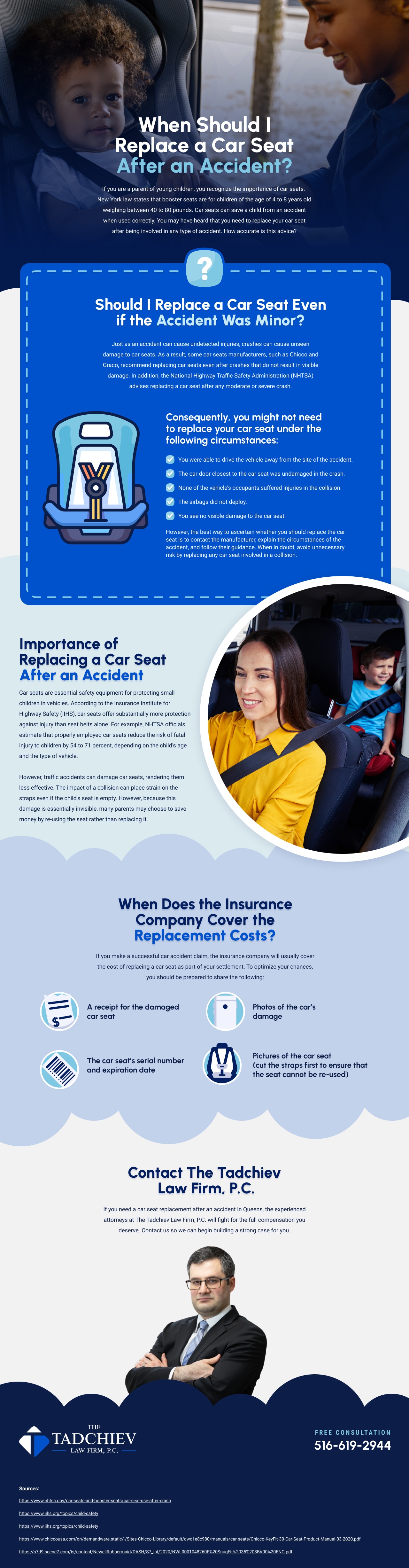
Credit: tadchievlaw.com
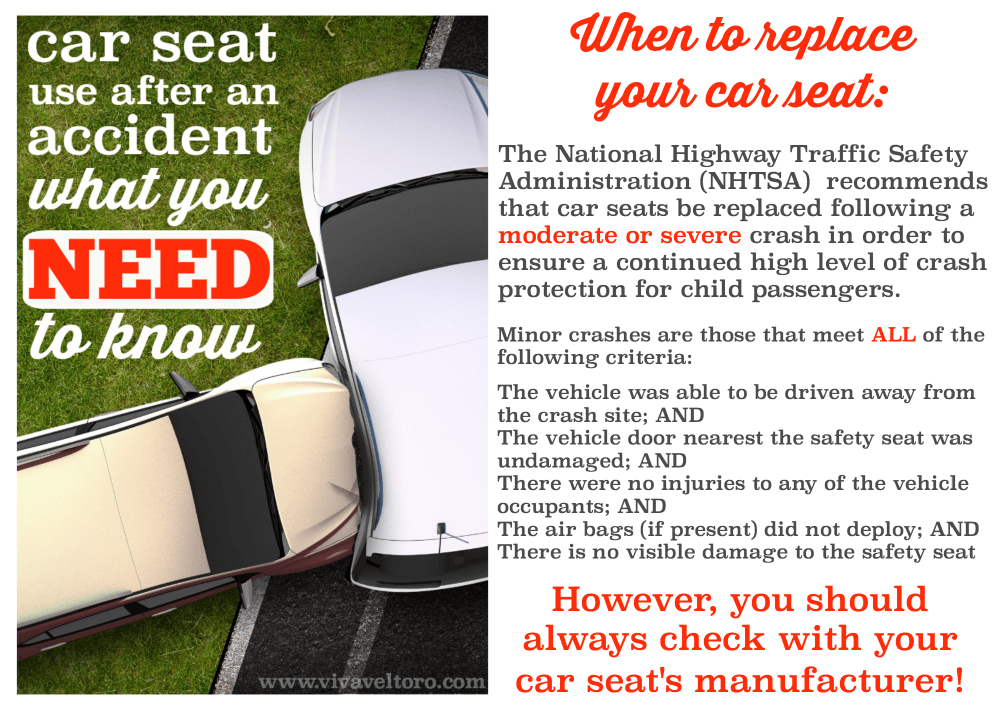
Credit: www.vivaveltoro.com
Frequently Asked Questions
Is A Car Seat Safe After An Accident?
Car seats may not be safe after an accident. Damage might be invisible, compromising safety. Always check the manufacturer’s guidelines. Some recommend replacement after any accident, regardless of visible damage. Ensuring your child’s safety is paramount, so consider replacing it to avoid risks.
Should I Replace My Car Seat After A Crash?
Replacing your car seat after a crash is advisable. Even minor accidents can weaken its structure. Check with the manufacturer for specific advice. Prioritizing safety ensures your child is protected. Undetected damage can lead to safety failures in future accidents.
How Do I Inspect A Car Seat Post-accident?
Inspecting a car seat post-accident involves checking for visible damage. Look for cracks, dents, or stress marks. Consult the manufacturer’s guidelines for detailed inspection steps. If unsure, consider professional evaluation or replacement. Safety should always be the top priority.
Can Insurance Cover Car Seat Replacement?
Insurance may cover car seat replacement after an accident. Check your policy details or contact your insurer directly. Some policies offer coverage for child safety equipment. It’s essential to verify coverage specifics for peace of mind. Don’t hesitate to seek clarity from your insurance provider.
Conclusion
Assessing car seats after an accident is vital for safety. Damaged seats may fail to protect your child. Always inspect for visible damage. Check for recalls or manufacturer guidance. Even minor accidents can affect seat integrity. Replace if unsure. Child safety is a priority.
Experts recommend not taking risks. A new seat ensures peace of mind. Protect your loved ones with a reliable seat. Making informed choices keeps your family safe. Always prioritize their well-being. Stay informed and vigilant. Your child’s safety depends on it.
Drive safely and keep your family secure.


