


What is Illinois Car Seat Law: Essential Guide for Every Parent

Are you sure your child’s car seat meets Illinois law? Understanding the Illinois car seat law is more important than you might think.
It’s not just about following rules—it’s about keeping your little one safe every time you hit the road. You’ll discover exactly what the law requires, why it matters, and how you can protect your child without confusion or stress. Keep reading to make sure you’re doing everything right for your family’s safety.
Illinois Car Seat Requirements
Illinois car seat requirements keep children safe during car rides. These rules protect kids based on age and weight. Following them helps reduce injury risks in crashes.
Parents and caregivers must know which car seat fits their child. Different seats suit different ages and sizes. Proper use ensures maximum safety.
Age And Weight Criteria
Children under 2 years old must ride in a rear-facing car seat. They should stay rear-facing until they reach the seat’s weight limit, usually 40 pounds.
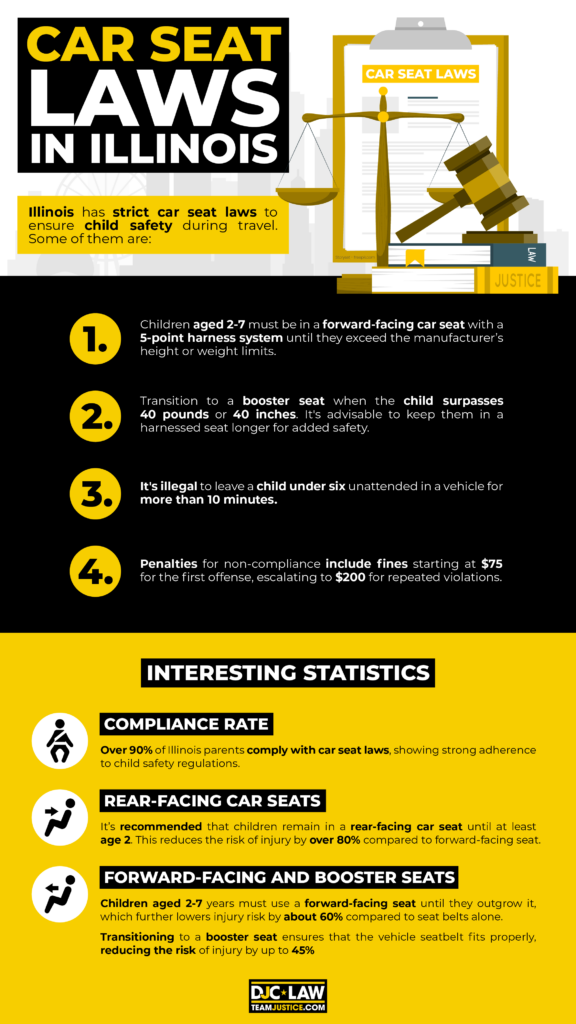
Kids aged 2 to 4 years must use a forward-facing car seat with a harness. This seat fits children who weigh at least 20 pounds but less than 40 pounds.
Children aged 4 to 8 years should ride in a booster seat. They must weigh at least 40 pounds and be shorter than 4 feet 9 inches.
Children over 8 years old or taller than 4 feet 9 inches can use a regular seat belt. Seat belts alone are not safe for younger or smaller kids.
Types Of Car Seats Allowed
Rear-facing car seats fit infants and toddlers. They protect the head, neck, and spine in a crash.
Forward-facing car seats with a harness are for toddlers and preschoolers. The harness keeps children secure in the seat.
Booster seats raise children so seat belts fit properly. They help the belt sit across the chest and hips, not the neck or stomach.
Car seats must meet federal safety standards. Look for labels showing approval by the National Highway Traffic Safety Administration (NHTSA).
Proper Installation Tips
Proper installation of a car seat is key to keeping your child safe. Many parents struggle with this task. Simple steps can make a big difference. Knowing how to install a car seat correctly helps protect your child during every trip. Below are tips to guide you through the process.
Using Latch Vs. Seat Belts
Two main methods attach a car seat: LATCH and seat belts. LATCH stands for Lower Anchors and Tethers for Children. It is a system built into most cars and seats. LATCH is easy to use and reduces installation errors. Seat belts can also secure the car seat firmly.
Check your car manual to know if your vehicle has LATCH anchors. Use the method that fits your car and seat best. Ensure the car seat does not move more than one inch side to side or front to back. Tighten straps or belts until the seat is secure.
Common Installation Mistakes
Many parents make simple errors that reduce safety. One common mistake is a loose car seat. The seat should not shift easily. Another error is using the wrong recline angle. The seat must be level to protect your child’s head and neck.
Straps should lie flat, without twists. The chest clip must be at armpit level. Avoid using old or expired car seats. Always follow the instructions from the car seat and vehicle manuals. Double-check installation to ensure your child’s safety.
Transitioning Between Seats
Transitioning between car seats is an important step in keeping your child safe in the car. Each seat type offers different protection levels. Moving at the right time helps prevent injuries. Illinois car seat law sets clear rules for these changes. Understanding these rules helps parents follow the law and protect their kids.
When To Move From Rear-facing To Forward-facing
Children must stay rear-facing until they reach the seat’s weight or height limit. This position protects their head and neck during a crash. Illinois law requires rear-facing seats for toddlers at least until age 2. Some seats allow children to stay rear-facing longer. Check your car seat manual for exact limits. Switch to forward-facing only after your child outgrows the rear-facing seat.
Switching To Booster Seats
Booster seats help children use seat belts properly. Illinois law requires booster seats for kids under age 8. Your child should be at least 4 feet 9 inches tall to stop using a booster. The booster raises your child so the seat belt fits correctly. Never move to a booster seat too early. Follow the height and age rules to keep your child safe.
Legal Penalties And Enforcement
Illinois takes car seat laws seriously to protect children. The state enforces rules strictly. Not following these laws can lead to legal trouble. Understanding the penalties helps parents stay safe and avoid fines. Police officers also play a key role in enforcing these rules during traffic stops.
Fines For Non-compliance
Parents or drivers who fail to use proper car seats face fines. The first offense can cost up to $75. Repeat offenses may lead to higher fines. These fines aim to encourage safe driving habits. The state wants every child to be secured correctly in the vehicle.
Police Enforcement Practices
Police officers check car seats during routine stops. They look for correct installation and age-appropriate seats. Officers may give warnings for minor issues. Serious violations result in tickets and fines. They also educate drivers on proper car seat use to prevent accidents.
Car Seat Safety Checks And Resources
Car seat safety checks help ensure your child’s seat is installed correctly. Proper installation can save lives. Many parents find it hard to know if their car seat fits well. Resources are available to guide you through this process. These checks reduce risks in car accidents and improve child safety.
Experts can inspect car seats and give advice. This support helps parents feel confident about their child’s safety. Knowing where to get inspections and finding support makes a big difference.
Where To Get Your Car Seat Inspected
Many local fire stations offer free car seat inspections. Certified technicians check the seat’s fit and installation. Some hospitals also provide inspection events for parents. Safety organizations host regular car seat check days. Search for nearby locations online or call your local police station for information.
Available Support For Parents
Parent support groups share tips on car seat safety. Child safety advocates provide free advice and resources. Some community centers offer classes on proper car seat use. Online forums and videos show how to install seats step-by-step. Support helps parents keep their children safe on every trip.

Credit: tpmblegal.com
Credit: teamjustice.com
Frequently Asked Questions
What Are The Basic Illinois Car Seat Laws?
Illinois law requires children under age 2 to use a rear-facing car seat. Kids aged 2 to 8 must use a child safety seat or booster. Children over 8 or 4’9” tall can use a seat belt.
When Can A Child Stop Using A Booster Seat In Illinois?
Children can stop using a booster seat when they turn 8 years old or reach 4 feet 9 inches tall. After this, they must use a regular seat belt properly.
Are There Penalties For Violating Illinois Car Seat Laws?
Yes, violating Illinois car seat laws can result in fines. Parents or guardians may be fined if children are not properly restrained. Proper car seat use helps avoid penalties and keeps kids safe.
What Type Of Car Seat Is Required For Infants In Illinois?
Infants under 2 years old must ride in a rear-facing car seat. This is the safest position for babies. The seat must meet federal safety standards.
Conclusion
Illinois car seat laws protect children on every trip. Using the right seat keeps kids safe and follows the law. Parents must know the rules for each child’s age and size. Proper installation is key to effectiveness. Staying informed helps avoid fines and ensures child safety.
Remember, safety starts with a secure car seat. Drive with care and protect your little ones today.


