


When to Replace Car Seat After Accident: Essential Guide

Have you ever wondered about the safety of your car seat after an accident? It’s a question that might not cross your mind until it’s crucial.
The safety of your little ones or even yourself depends heavily on this often-overlooked aspect of post-accident recovery. While the damage to the car might be visible, the impact on the car seat isn’t always apparent. This could leave you questioning, “Is it still safe?
” Or “Should I replace it? ” Understanding when to replace a car seat after an accident is vital to ensuring continued protection on the road. Stick around as we delve into the signs, guidelines, and expert advice that will empower you to make the safest choice for you and your family.
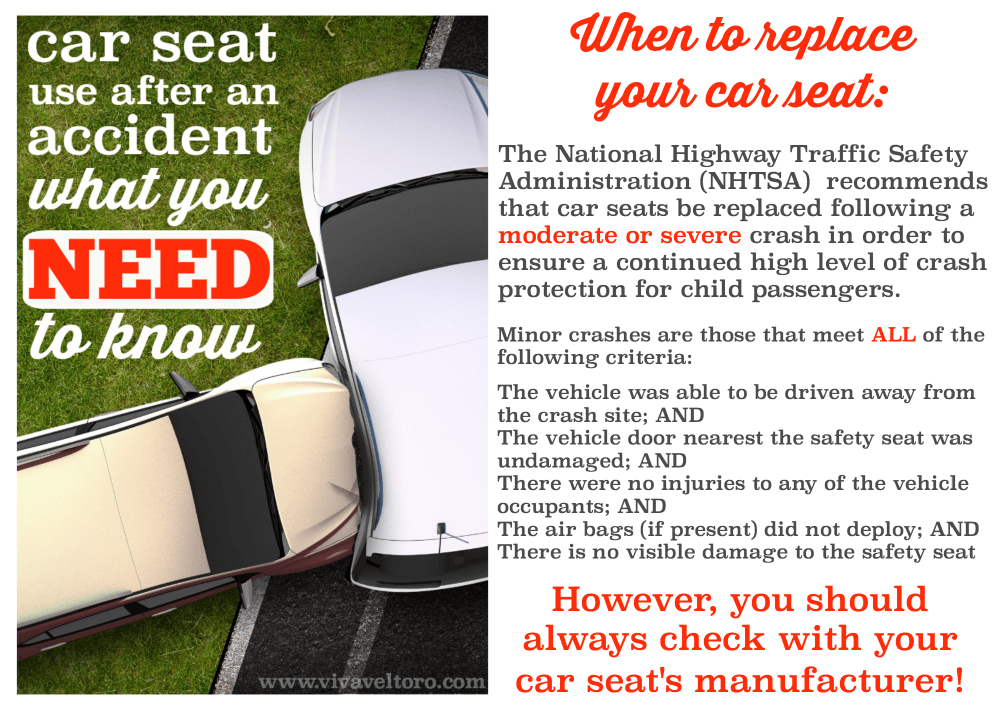
Credit: www.vivaveltoro.com
Signs Of Damage
Car seats often need replacement after accidents. Look for signs like broken buckles or twisted belts. Even minor damage can compromise safety.
Understanding the signs of damage after a car accident is crucial. Your car seat may seem fine at first glance. Yet, hidden issues could compromise safety. Knowing what to check helps ensure your child’s protection.Visible Wear And Tear
Check your car seat for obvious wear. Look for cracks in the plastic shell. Examine the fabric for tears or frays. These signs may indicate the need for replacement. Even small damages can affect the seat’s performance.Structural Integrity Issues
The seat’s structure is key to safety. Inspect for bent or broken parts. Listen for unusual sounds like clicks or creaks. These can suggest compromised integrity. If the seat doesn’t sit evenly, it may be damaged.Safety Mechanism Failure
Safety mechanisms must work flawlessly. Test the harness and buckles. They should fasten securely without sticking. If the recline or adjust settings don’t work, consider replacing. Faulty mechanisms can reduce protection in future incidents.Types Of Accidents
Car seats often need replacement after accidents to ensure safety. Rear-end collisions or side-impact crashes can damage a car seat’s structure. Even minor accidents might affect its effectiveness, so checking for visible damage is crucial.
When your car gets into an accident, assessing the car seat’s safety is crucial. Different types of accidents can affect the car seat differently. Understanding these distinctions helps you make informed decisions. Here’s a breakdown of the types of accidents and their impact on car seats.Minor Collisions
Minor collisions often occur at low speeds. These can include fender benders or parking lot bumps. In these situations, the car seat might not show visible damage. Yet, the impact can still affect its structural integrity. Always check the manufacturer’s guidelines after any collision. Some recommend replacing the seat even after minor incidents.Moderate Crashes
Moderate crashes involve more significant impact than minor ones. The car might sustain noticeable damage. Car seats in these accidents face greater stress. Even if the seat looks fine, internal damage can occur. It’s often advised to replace the seat to ensure future safety. Consulting with a professional can give you peace of mind.Severe Accidents
Severe accidents involve high-impact collisions. These can lead to major vehicle damage. Car seats in such accidents are likely compromised. The force can weaken the seat’s structure, making it unsafe. In severe cases, replacing the car seat is usually non-negotiable. This ensures the highest level of protection for your child. Always prioritize safety over cost in these situations.Inspection Process
After an accident, assessing your car seat is crucial. Safety is a top priority. A damaged seat might not protect your child in future incidents. Understanding the inspection process helps ensure safety.
Professional Assessment
Getting a professional assessment is a wise step. Experts know what to look for. They have experience with various seat types. Professionals ensure thorough inspections. They identify damage not visible to the untrained eye. This gives peace of mind.
Self-check Guidelines
Self-checks are also beneficial. Start with a visual inspection. Look for cracks or stress marks. Check the harness for wear and tear. Examine the seat base for any deformities. Listen for unusual sounds when adjusting straps. These checks help spot obvious damage.
Manufacturer Recommendations
Always refer to the car seat manual. Manufacturers provide specific guidelines. They outline when to replace seats post-accident. Some seats need replacement even after minor accidents. Others might be safe after minor impacts. Follow their advice to maintain safety standards.
Insurance Coverage
Understanding insurance coverage is crucial when replacing a car seat after an accident. Insurance can ease the financial burden, ensuring safety for your child.
Policy Terms
Different policies have unique terms for car seat replacement. Some policies may cover the full cost. Others might require meeting certain conditions first. Always read your policy documents carefully. Knowing your coverage limits is essential. Some insurers require proof of the accident’s impact. This can include police reports or photos.
Claim Process
The claim process varies across insurers. Start by contacting your insurance company. They will guide you through necessary steps. Provide all required documentation promptly. This might include a receipt for the new car seat. An adjuster may assess your claim. Approval can take time, so be patient. Ensure you follow up regularly for updates.
Cost Considerations
Replacement costs can differ based on the car seat’s model. High-quality seats might have higher prices. Insurance coverage can offset these expenses. Be aware of any deductible you might owe. Some policies may cover only a portion of the cost. Consider out-of-pocket expenses when budgeting. Understanding these costs helps avoid surprises.
Safety Standards
Safety standards are vital in deciding when to replace a car seat after an accident. They ensure the safety of your child. Understanding these standards helps you make informed choices.
Regulatory Requirements
Various countries have specific rules for car seat replacement after accidents. In the United States, the National Highway Traffic Safety Administration (NHTSA) provides guidelines. They suggest replacing a car seat after a moderate or severe crash. Not every accident requires a replacement. Minor crashes may not affect a seat’s safety. Check local laws for exact rules in your area.
Industry Best Practices
Car seat manufacturers offer their own guidelines. Many suggest replacing seats after any crash. This ensures maximum safety for your child. Follow the manufacturer’s recommendations. It aligns with industry best practices. These guidelines are based on extensive testing and research.
Certification Marks
Certification marks indicate a seat meets safety standards. Look for labels like FMVSS 213 in the U.S. These marks confirm the seat passed rigorous tests. After an accident, check if the seat retains its certification mark. If not, consider replacing it. This step ensures continued safety for your child.
Choosing A Replacement
Choosing a replacement car seat after an accident is crucial. Safety is the top priority. A new seat ensures your child’s protection. But finding the right one can be daunting. Consider several factors before making a decision. This guide will help you navigate the options available.
Types Of Car Seats
Car seats come in various types. Infant seats are for newborns. Convertible seats grow with your child. Booster seats are for older kids. Each type serves a specific age and weight. Know your child’s needs before selecting. Ensure the seat fits your vehicle properly.
Features To Consider
Look for key features in a car seat. Check the safety ratings first. Ensure it has side-impact protection. Look for a five-point harness system. Consider ease of installation. Removable covers help with cleaning. Adjustable headrests accommodate growth.
Budget-friendly Options
Car seats vary in price. Some affordable options offer great safety. Don’t compromise on safety for cost. Research before purchasing. Check for discounts or sales. Second-hand seats are not recommended. They may have unseen damage from previous use.
Installation Guidelines
Installing a car seat correctly is crucial after an accident. Proper installation ensures the safety of your child. It prevents injuries in future accidents. Follow these guidelines for safe installation. Avoid common mistakes to ensure the seat is secure.
Correct Positioning
Position the car seat in the center of the back seat. This spot provides maximum protection. Ensure the seat faces the correct direction. Infants should face the rear. Older children can face forward. Check the angle of the seat. Ensure it aligns with the manufacturer’s recommendations. A correct angle provides support and comfort.
Securing Methods
Use the car’s seat belt or LATCH system. The LATCH system offers a secure attachment. Always check the tightness of the seat. It should not move more than an inch. Double-check the harness. Ensure it fits snugly around the child. The chest clip should be at armpit level. These securing methods prevent the seat from shifting.
Common Mistakes
Many parents make installation errors. Avoid placing the seat in the front passenger seat. This location is dangerous due to airbags. Ensure the harness is not too loose. A loose harness fails to protect the child. Do not use expired car seats. Check the car seat’s expiration date. An expired seat may not perform well in a crash.

Credit: www.busymommymedia.com
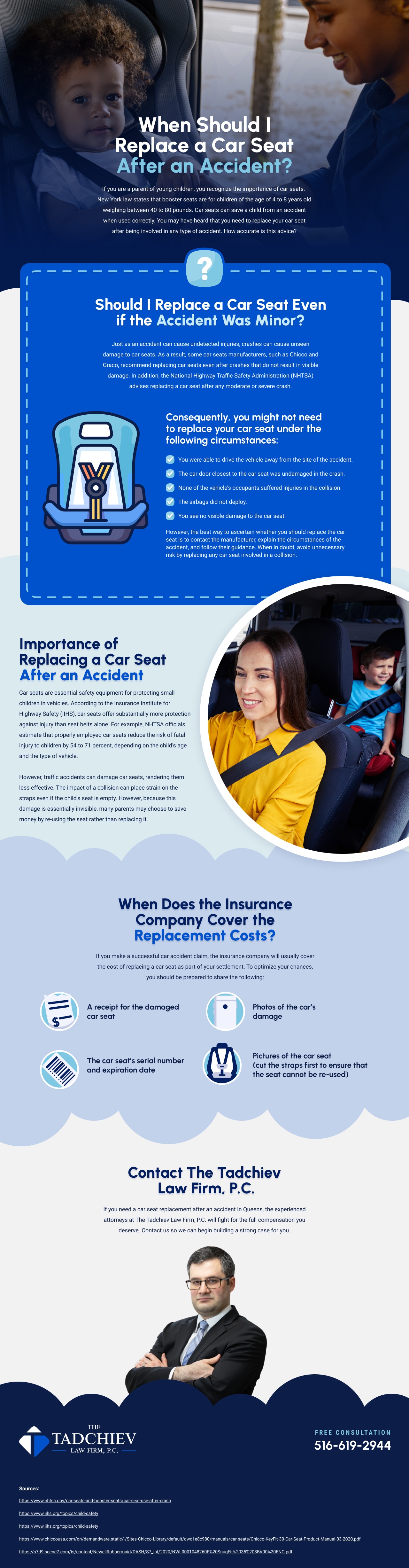
Credit: tadchievlaw.com
Frequently Asked Questions
How Soon To Replace Car Seat Post-accident?
It’s advisable to replace a car seat immediately after a moderate or severe accident. Damage may not be visible, but integrity could be compromised. Always check your car seat manufacturer’s guidelines for specific recommendations related to post-accident replacements to ensure maximum safety for your child.
Can Minor Accidents Affect Car Seat Safety?
Yes, even minor accidents can affect car seat safety. Small impacts might cause unseen damage to the seat’s structure. Always inspect the seat thoroughly and consult the manufacturer’s advice. Prioritize your child’s safety by considering replacement if any doubt arises regarding the seat’s condition.
What Are Signs Of Car Seat Damage?
Signs of car seat damage include visible cracks, broken parts, or loose components. Less obvious signs might include difficulty in adjusting straps or recline positions. Always perform a detailed inspection after an accident. Consulting a professional can help ensure the seat’s integrity is intact.
Is Insurance Coverage Available For Car Seat Replacement?
Yes, insurance may cover car seat replacement after an accident. Check your policy or contact your insurance provider for details. Some companies offer reimbursement or direct replacement options. Having documentation of the accident and purchase receipt can facilitate claims.
Conclusion
Replacing a car seat after an accident is crucial. Safety comes first. Damage often hides beneath the surface. Protect your child by inspecting seat integrity. Always prioritize new seats over repaired ones. Even minor accidents can affect seat performance. Consult professionals for advice.
Manufacturers often recommend replacement after any crash. Your child’s safety depends on it. Ensuring proper protection means peace of mind. Regular checks help prevent unseen risks. Trust your instincts if unsure. Invest in safety to avoid regrets. Remember, safety is priceless.
Car seats save lives, so keep them effective. Stay informed and choose wisely.


